


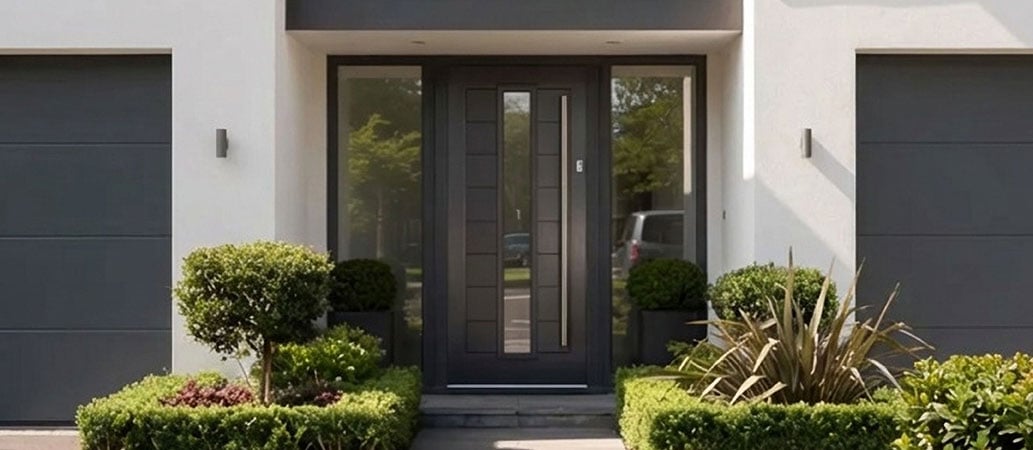
When you’re shopping for a new aluminium door, the threshold is probably not the first (or fourth) thing that comes to mind. But it’s actually incredibly important: it affects the way your door looks, how it works, how you use it, and how it keeps the elements outside.
Here’s an easy-to-understand guide to exactly what an aluminium door threshold is, how they work, and what you need to know for your home.
What Is an Aluminium Door Threshold?
An aluminium door threshold is the horizontal part right at the base of the door frame: the strip that sits between the actual door and the floor. As the name suggests, you cross it every time you step in or out of the door.
The threshold connects the two vertical parts of the door frame, making it a complete rectangle that’s sealed at ground level. For aluminium doors, the threshold is also made of the same metal and is just as durable and finished with a powder coat.
You’ll probably see a lot of talk about the door cill if you’re looking up information about door thresholds; sometimes the terms are used interchangeably, but they’re actually different components. The cill is the ledge under the threshold that extends out from the door frame to direct water away from the building and door and onto the ground outside.
What Does an Aluminium Door Threshold Do?
An external aluminium door threshold serves a few purposes, most of which involve weather-proofing and energy efficiency.
For a start, the threshold is incredibly important for weather sealing and stopping rain and wind from getting into your home under the door itself. When your aluminium front door closes, the bottom presses against the threshold’s seals to form a tight barrier against the elements, keeping draughts and leaks outside.
The threshold also helps with drainage and directing rainwater away from your brickwork. High-quality external aluminium door thresholds include drainage channels that intercept any water that gets past the door seal and direct it back out through the frame.
Most modern aluminium thresholds also include a thermal break, much like the door frames themselves. This stops cold bridging (cold air entering the home from outside) at the floor level. Without a thermal break, you might notice condensation forming or energy loss escaping through the door, and it can be the difference between an average and a high-quality door system.
Types of External Aluminium Door Thresholds
External aluminium door thresholds come in three main types: low, standard and flush. Each is best suited to different locations, levels of weather exposure and accessibility requirements. For example, the right threshold for a porch in a coastal location versus a garden bi-fold door in a sheltered position.
Low Thresholds
A low threshold has a profile of 15mm (or less) and creates a very minimal step between the inside and outside of the door frame. The outside edge is chamfered and slightly angled to keep a smooth profile to help feet and wheels easily glide over it. They’re popular choices for patios and rear doors that back onto gardens as well as anywhere where accessibility is the main priority.
Low thresholds work well for wheelchair users and anyone who might find a higher step a bit challenging (including those with mobility issues and pushchair users). Of course, to make sure doorways are completely accessible for wheelchair users, make sure to keep a clear opening width for the door and adjust the handle height as needed.
15mm is the legal maximum threshold for accessible entrances according to UK Building Regulations Approved Document M; while it’s the legal requirement for new builds, it’s also a good consideration for homeowners who plan to stay in their home in the long-term.
Standard Thresholds
A standard threshold has a raised aluminium section at the base of the door frame, usually 25 to 75mm. The door will close against or behind this threshold (often called an upstand), which acts as a physical blocker for wind and rainwater. This is probably the type of threshold you’re used to, as it’s been the default for front doors in UK homes for decades.
Standard thresholds do an excellent job of protecting against the weather. In particularly exposed places (e.g. coastal properties or front doors without a canopy or porch overhead), the extra bit of height the upstand brings is a good protector against heavy, driving rain.
The trade-off for that extra weather protection is access. Any step, even a small one like this, is still technically a trip hazard, particularly for anyone with mobility issues or the elderly. That said, for a front door where accessibility isn’t the main priority, a standard aluminium threshold is often a practical choice.
Flush Thresholds
As you’ve probably already guessed, a flush threshold sits… well, flush. A flush threshold for an aluminium door sits exactly level with both the floor inside and the external ground surface, essentially at 0mm. There’s no “step” at all, just a smooth continuous surface from inside to out.
Understandably, this is the most accessible option, and as a result it’s popular amongst contemporary homes, new build developments and extensions. Flush thresholds are also the top choice for the garden living, indoor-outdoor style trend that’s led to bi-fold and sliding doors becoming more popular.
To keep the weather out, a flush threshold has to work a little harder than its taller counterparts. An automatic drop seal is attached to the door leaf and closes flush with the floor when it’s closed. Brush strips protect against draughts, and a slot drain is usually cut into the floor to capture any water that gets past the first seal. Returning again to cills, there’s usually an external sub-cill that directs rain away from the external aluminium door threshold before it even approaches the leaf itself.
While flush thresholds are popular for accessibility and style, it does come with an important caveat: they do pose more of a drainage risk in exposed conditions. For a sheltered south-facing garden, or under a porch covering, a flush threshold should be fine. But for a location that faces more driven rain without overhead shelter, specification and installation quality become even more important; a qualified installer or specialist will be able to tell you the right choice for your property.
How to Choose the Right Aluminium Door Threshold
As you’ve probably gathered, the threshold type that’s right for one doorway isn’t necessarily right for another. A true front door and a rear-facing bi-fold have different requirements, and it’s important to make the right choice.
Door type and position: Sliding patio or bi-fold doors pretty much always go for low or flush track systems. Standard front doors have a bit more flexibility between standard, low, and flush: the right choice will depend on what else is going on around the opening.
Weather exposure: As well as an entrance/exit, the door is a big barrier to the elements. The more exposed the doorway is to wind and rain (particularly north or west-facing, or anywhere without a porch covering), the more a standard or high-quality low threshold is important. Using a flush threshold in a location like this can perform well, but it relies on excellent drainage and other factors.
Floor levels: The natural height difference between the ground outside and the internal floor will affect what makes sense for your aluminium door’s threshold (without also adding in extensive groundwork).
Accessibility requirements: New build dwellings are required by Document M to have a maximum threshold height of 15mm, which effectively means you need a low or flush system.
Who’s using the door: If you know your front door is going to be regularly used by anyone elderly, with reduced mobility, or who uses a wheelchair, it’s a good idea to specify with accessibility in mind right from the get-go. Essentially, the lower the threshold, the lower the trip hazard.
Design choice: Flush thresholds tend to be more popular for sleek, contemporary designs, while the standard door thresholds typically look more traditional.
Maintaining and Cleaning an Aluminium Threshold
One of the reasons people choose aluminium vs composite or other materials is because it’s so low-maintenance.
Cleaning aluminium threshold systems is extremely straightforward: you really only need to arm yourself with a bucket of soapy water and a soft cloth. In fact, you should avoid strong/abrasive cleaners and solvents, which can actually damage the powder coat finish.
An important step that shouldn’t be missed is cleaning out drainage channels. Leaves, stones and debris will collect in the internal drain paths in any external aluminium threshold, and it’s the main cause of water pooling or small leaks. Clear them out with a soft brush a couple of times a year, and flush through with a bit of water to make sure they’re draining properly.
Give the door seals and brushes around the threshold a once-over each year. Seals can usually be replaced easily, and a bit of silicone lubricant can help with any minor mechanism problems.
Why Aluminium Doors Are a Popular Choice
The threshold is just one part of the whole door system, so it’s worth understanding why you might choose aluminium doors in general.
Aluminium’s strength as a material means you can achieve slim frame profiles that allow more of the door itself to be glazed glass: less frame, cleaner lines, more natural light. That strength also works well for longevity, and aluminium doors often last 40-60 years without any warping or corrosion. They’re also efficient thanks to thermal breaks in the frame, and compatible with multi-point locking as standard.
The threshold is part of this whole system: the right seals and drainage are what allow the door to be efficient and effective. Choosing the right aluminium door threshold is part of the door specification itself.
Find the Right Aluminium Door with National Plastics
Whether you’re unsure what the best threshold type is for your home, or simply want to go over the many options for your front door, National Plastics can help.
Browse our full range of aluminium doors online, or head into your nearest branch to view the options yourself and get advice from our team.


