How Modern Aluminium Doors Improve Home Design
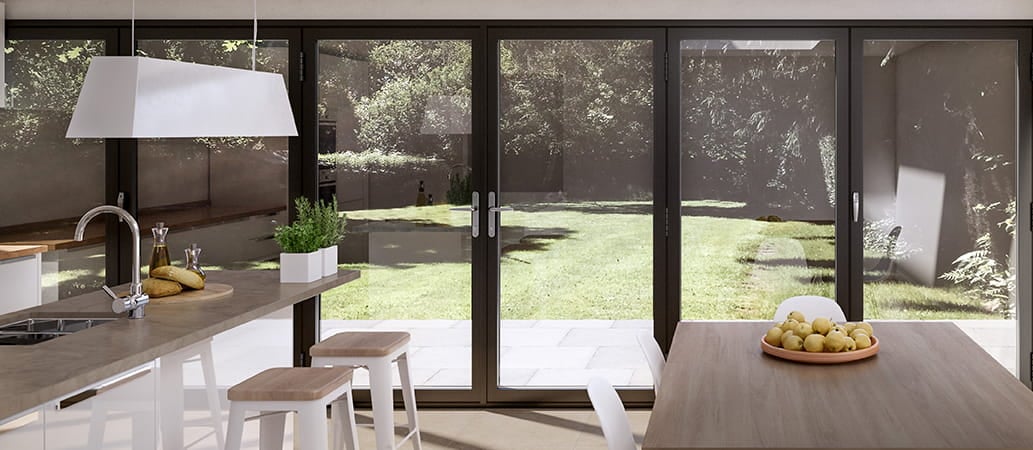
The doors you choose for your home do a lot more than simply open and close. They shape how a space feels from the inside, how your property looks from the outside, and how much natural light and air move between the two.
Over the past decade or so, modern aluminium doors have become increasingly popular with UK homeowners who want a combination of clean contemporary aesthetics and long-term performance, and it's not difficult to see why.
Aluminium lends itself naturally to modern architectural design. Its strength allows for much slimmer frames, which means more glass, more light and better views. It's also highly durable, resistant to warping, corrosion, and the persistent damp that the British climate tends to throw at buildings. And with an almost limitless range of powder-coat finishes available, it suits a wide variety of home styles, from crisp contemporary new builds to older properties being given a modern update.
In this guide, we'll walk through the key design and performance benefits of modern aluminium doors, what to consider when choosing a door system, and how National Plastics can help you find the right option for your home.
Slim Frames and Expansive Glass Areas
One of the most immediate visual differences between aluminium and other door materials is how little of the frame you actually notice. Because aluminium has a far higher strength-to-weight ratio than timber or uPVC, manufacturers can engineer much slimmer profiles while still meeting the structural and security requirements of a door system.
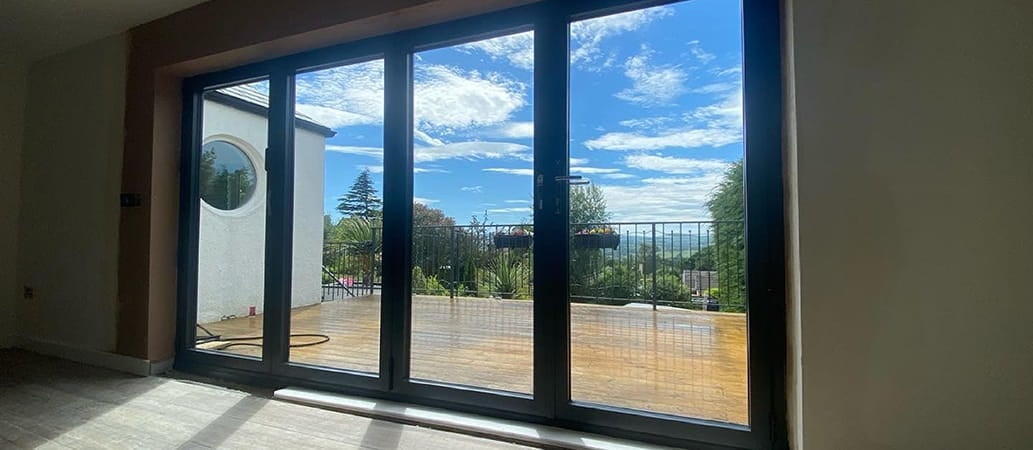
In practice, this means more of the view and more of the light. Where a timber or uPVC door might present a substantial frame that occupies a meaningful portion of the opening, a well-designed aluminium door keeps the sightlines minimal, allowing the glass to do its job. For doors that open onto a garden or a patio (or a particularly good view), this is a genuine advantage that becomes more appreciated the longer you live with it.
The slim-profile aesthetic also tends to age well. Fussy, over-engineered frames tend to go in and out of style; clean, minimal sightlines have been a feature of good architectural design for decades and show no signs of falling out of favour.
Increased Natural Light and Brighter Living Spaces
Natural light is one of those things that's easy to underestimate until you have more of it. Homes with good light feel bigger, warmer, and more welcoming, and research consistently shows that exposure to natural daylight has a positive effect on mood, energy levels and overall wellbeing. Doors that maximise the glazed area are one of the most straightforward ways to bring more of it in.
Because aluminium doors can accommodate larger glass panels than most other materials, they tend to perform particularly well for letting in natural light. Bi-fold doors and sliding setups are especially effective, since they can span a wide opening and, when open, remove any barrier between the interior and the garden almost completely. But even a well-designed aluminium front door or French door can make a meaningful difference to how much light reaches the interior of a hallway or living room.
For rooms that face south or west, the difference between a standard door and one designed around expansive glazing can be significant, particularly during autumn and winter when daylight hours are short and every bit of natural light counts.
Modern Architectural Style and Kerb Appeal
Let’s be honest, first impressions matter quite a bit when it comes to a home, whether you're thinking about everyday life, resale value, or simply how much you enjoy arriving at your front door. The outside of a property creates an immediate impression, and the doors (and windows) count for quite a bit.
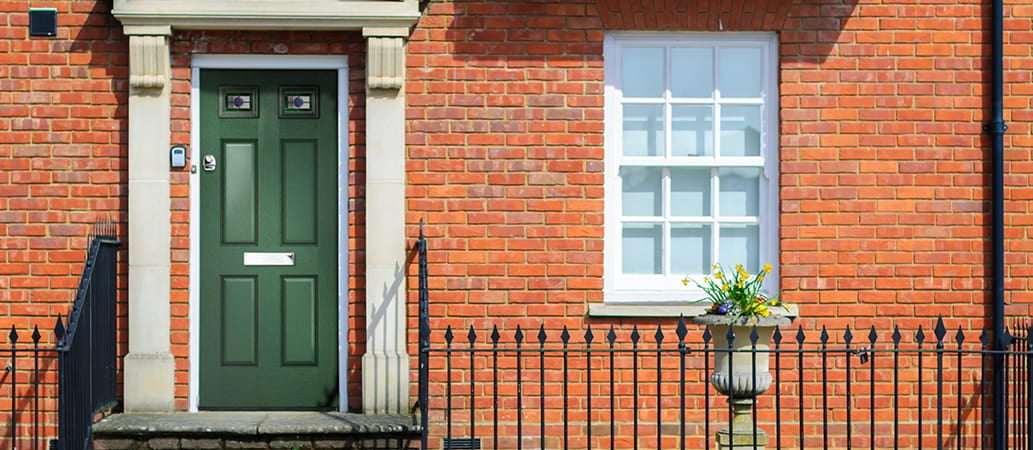
Modern aluminium front doors have become a popular choice for homeowners who want to update the exterior of their property without committing to a full renovation. A clean, contemporary aluminium door in a bold anthracite grey or matte black finish, for example, can transform the look of a facade immediately, giving any property a sharper, more intentional appearance that reads as well-considered and deliberate rather than off-the-shelf.
Aluminium also holds its appearance over time in a way that other materials don't always manage. The powder-coat finish is resistant to UV fading and doesn't peel or crack the way painted timber can, so the kerb appeal you invest in on day one doesn't really gradually degrade over the following years. For homeowners who care about the long-term appearance of their property, that consistency matters. It also means the consistent maintenance isn’t really more than a gentle clean every now and again, without needing to get the paint pots out every time.
Indoor–Outdoor Living Integration
The concept of indoor–outdoor living has gone from being a nice-to-have that people aspire to, to something many UK homeowners actively plan for, particularly as open-plan kitchen and living extensions have become more common, along with outdoor rooms and conservatories. It’s part of the reason we’ve launched our hup! range; so you can tailor your indoor-outdoor spaces exactly as they suit you.
Aluminium bi-fold doors and sliding door systems are central to making this work well, because they allow you to open up a significant portion of a wall and effectively extend the living space into the garden when the weather permits, and close it again when the rain starts.
The appeal goes beyond aesthetics. When a set of bi-fold or sliding doors is fully open, it changes how a space functions. The kitchen becomes part of the garden, or the dining area connects to a decked terrace. Children move freely between inside and outside without a bottleneck at a narrow door. For families with young children, or for those who entertain regularly, this kind of spatial fluidity makes a genuine practical difference to how the home works day-to-day.
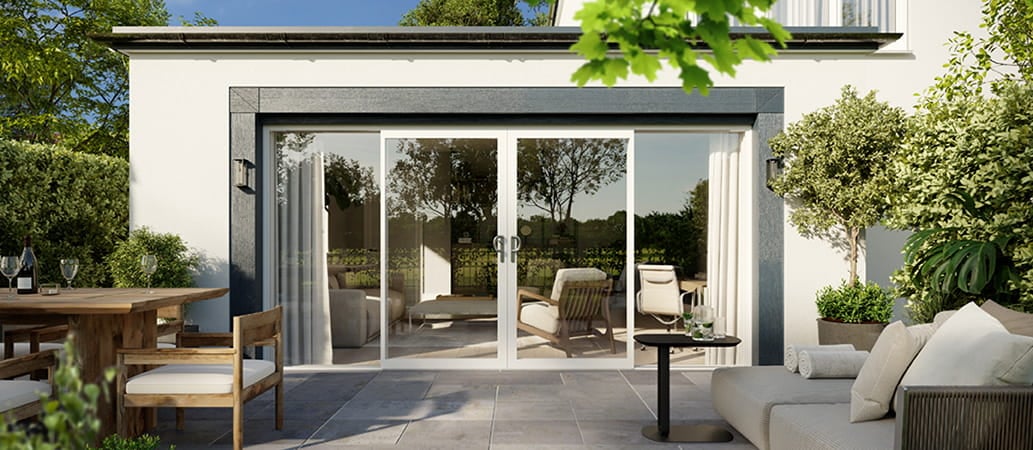
Aluminium is particularly well suited to patio door setups, because it can span wide openings without requiring additional structural support, and because the slim frames keep the transition between inside and outside feeling as open as possible. When the doors are closed, the expansive glazing keeps that visual connection to the garden even in the depths of winter.
Design Flexibility and Colour Options
One of the reasons aluminium has become such a commonly used material in both residential and commercial architecture is how adaptable it is. The extrusion process that’s used to form aluminium profiles allows manufacturers to create a huge range of frame shapes, sizes and configurations, and the powder-coat finishing process means the colour options are wide-ranging, with something for every property.
For modern homes, popular choices tend toward the darker end of the spectrum: anthracite grey, matte black, dark bronze, and slate tones all work well with contemporary architecture and complement the natural materials (such as stone cladding or timber boarding) that are often used alongside large glazed areas.
For those who prefer a lighter palette, white and cream finishes are equally available for aluminium doors. For period or traditional properties, heritage colours and woodgrain-effect finishes can help a modern door system sit more sympathetically within an older, classic aesthetic.
It's also worth knowing that aluminium doors are available in dual-colour finishes, where the colour on the interior face of the frame differs from the exterior. This allows homeowners to maintain a consistent interior colour scheme while choosing a bolder or more weatherproof finish for the outside of the building, which is a degree of flexibility that most other door materials can't offer.
Key Performance Benefits of Aluminium Doors
Ok so we’ve gone over the design advantages of modern aluminium doors, but it's worth being clear that the case for choosing them doesn't rest on aesthetics alone. The material and the engineering behind contemporary systems will deliver practical performance benefits that matter just as much in the long run as how the doors look.
Durable and High Security
Aluminium is an inherently strong material, and that strength translates directly into the structural integrity of the door. A well-made aluminium door is resistant to impact, difficult to force, and doesn't flex or deform in the way that weaker materials can.
Modern systems also work with multi-point locking mechanisms, which engage at several points along the frame at the same time, and provide a considerably higher level of security than a standard single-point lock.
The material is also corrosion-resistant, which is particularly important for properties in coastal areas or environments with high exposure to moisture. Unlike steel, aluminium doesn't rust, and unlike timber, it doesn't swell, shrink or rot. Over a typical lifespan of several decades, an aluminium door system will maintain its structural integrity in a way that needs much less intervention than most alternatives.
Strong Energy Efficiency
Wondering if bi-fold doors are draughty? The key to good thermal performance in an aluminium frame is thermal break technology: a strip of non-conductive material inserted between the inner and outer sections of the profile, which interrupts the path along which heat would otherwise transfer through the metal.
Modern aluminium door systems are built with thermal breaks as standard, and when combined with high-performance double or triple glazing, they can achieve U-values that meet or exceed current UK building regulations.
For homeowners concerned about energy bills or looking to improve the thermal performance of an extension or renovation, this is worth understanding. A well-specified aluminium door is a component that, when chosen and installed correctly, will make a real positive impact to the energy efficiency of your home.
Low Maintenance
Aluminium doors are the ideal low maintenance, easy option for homes; they don't warp, rot, swell or require repainting. The powder-coat finish applied during manufacturing is durable, UV-resistant, and doesn't require the kind of periodic maintenance that timber doors demand.
In practical terms, that means that keeping aluminium doors looking good is really just a matter of wiping them down with a damp cloth occasionally and keeping the hardware clean and lubricated.
For busy households, this is a genuine quality-of-life benefit. There's no stripping and repainting required every few years, no swelling during wet weather that makes the door difficult to open, and no inspecting for rot after a particularly harsh winter. The low maintenance requirement of aluminium also makes it an appealing choice for rental properties or second homes where the owners aren't on site regularly.
What Is the Average Cost of Aluminium Doors in the UK?
If you’re thinking of upgrading to modern aluminium doors, it makes sense to consider your budget. Cost is a practical consideration for most homeowners, and aluminium doors represent a higher initial investment than uPVC alternatives. Of course, the exact price varies considerably depending on the type of door, its size, the specification of glazing and hardware, and the cost of installation in your area, but the following ranges give a reasonable general guide.
A standard single aluminium front door, supplied and installed, typically sits in the range of £1,500* to £3,500*, depending on the design complexity, glazing specification and colour finish chosen. At the lower end, you'd expect a solid, well-performing door in a standard configuration; at the higher end, you're looking at larger formats, premium glazing, and bespoke colour or hardware choices.
Aluminium bi-fold door systems, which span wider openings and involve more panels and hardware, generally start from around £3,000* and can reach £10,000* or more for larger configurations with triple glazing or high-specification locking systems.
It's worth framing the cost of aluminium doors as a long-term investment rather than a straightforward price comparison. The low maintenance requirements mean you won't be spending money on repainting or repairing the doors, and their durability means they're unlikely to need replacing as quickly as cheaper alternatives.
Choosing Modern Aluminium Doors for Your Home
With so many really great aluminium door systems available, narrowing down the right option for your home involves thinking through a few key questions before you start comparing prices and finishes.
The first is the type of door you need. A front door, a bi-fold system for an extension, and a sliding patio door all serve different functions and suit different spaces. Think of it this way: if your primary goal is to open up a living area to the garden, a bi-fold or sliding configuration will serve you better than a single or double door. If you're replacing a front door or adding a side access point, a single or composite aluminium door is more appropriate. Getting the configuration right is the most important decision in the process, because it determines everything that follows.
After the actual configuration, glazing specification is the next most significant decision. For most UK homes, a well-specified double-glazed unit will meet building regulations and perform well thermally. However, if the opening is large, faces north, or sits in an exposed location, it's worth discussing triple glazing with your supplier.
Colour and finish are the final piece of the puzzle. The good news is that aluminium offers genuine flexibility here, and lots of suppliers will be able to match standard colours or offer a range of popular finishes to choose from. If you're replacing existing doors or windows, it's worth considering whether you want the new doors to match or whether you'd like to use them as an opportunity to update the overall colour scheme of the property's exterior.
Why Choose National Plastics for Aluminium Doors
National Plastics supplies a range of aluminium door systems designed to suit modern UK homes, from single front doors to full bi-fold and sliding configurations. Our branches are staffed by people who know the products well and can offer straightforward guidance on specification, sizing and what to expect from the installation process, without the pressure of a sales environment.
If you'd like to see the products in person and get a sense of the quality and finish, visiting your nearest branch is the most useful first step. You can also browse our full windows and doors range online and get in touch with the team to discuss your project in more detail.
*Prices are a guide only and subject to change based on property, product choices, and installation requirements.
FAQs
What are modern aluminium doors?
Modern aluminium doors are door systems built with aluminium frames, typically featuring slim profiles, large glazing areas and powder-coat colour finishes. They’re used for front doors, rear access doors, bi-fold systems, and sliding patio doors, and are popular in contemporary home design because of their clean aesthetic, structural strength and low maintenance requirements.
Are modern aluminium doors energy efficient?
Yes, when they’re properly specified. Modern aluminium door systems use thermal break technology, which stops heat from transferring through the metal frame, and they’re available with double or triple glazing to minimise heat loss through the glass. A well-specified aluminium door can easily meet or exceed current UK building regulations in terms of thermal performance.
How long do aluminium doors last?
Aluminium doors are extremely durable and, with basic maintenance, can last decades without needing to be replaced. The material doesn't rust, rot, warp, or corrode, and the powder-coat finish is resistant to UV fading and weathering. Most aluminium door manufacturers offer substantial guarantees on both the frames and the finish, reflecting the expected lifespan.
What colours are available for aluminium doors?
Aluminium doors are available in a very wide range of colours, thanks to the powder-coat finishing process. Popular choices for modern homes include anthracite grey, matte black, dark bronze, and slate tones, as well as white and cream for lighter schemes. Many styles are also available in dual-colour finishes, where the interior and exterior of the frame are finished in different colours.