What Is the Best Colour for Aluminium Windows?

Though it’s a popular ask, there isn't a single correct answer to what the best aluminium window colour is… even though it's actually one of the most important things to establish upfront when you’re working on new windows.
The best colour for aluminium windows depends on the style of your property, the materials used on the exterior, what you want the windows to contribute to the overall look of your home, and to some extent, how long-term your thinking is. A colour that works brilliantly on a new-build with grey render and timber cladding may feel wrong on a Victorian semi, and vice versa.
What aluminium does offer, which most other window materials don't, is a genuinely wide range of colour options through the powder-coat finishing process. Where uPVC is largely limited to white, cream, and a handful of standard woodgrain foils, aluminium frames can be finished in almost any colour from a standard RAL palette, including the darker and more unusual tones that have become popular over the past decade.
This guide covers the most widely chosen colours for aluminium windows in the UK, what each of them tends to work well with, and how to think through the decision for your own home.
Most Popular Aluminium Window Colours in the UK
While the full range of available colours is extensive, a handful of finishes account for the majority of aluminium windows fitted in UK homes. Each has its own character and its own natural home, though the boundaries between them are more fluid than you might expect (and of course, there’s no accounting for taste when it comes to window systems!).
Black Aluminium Windows
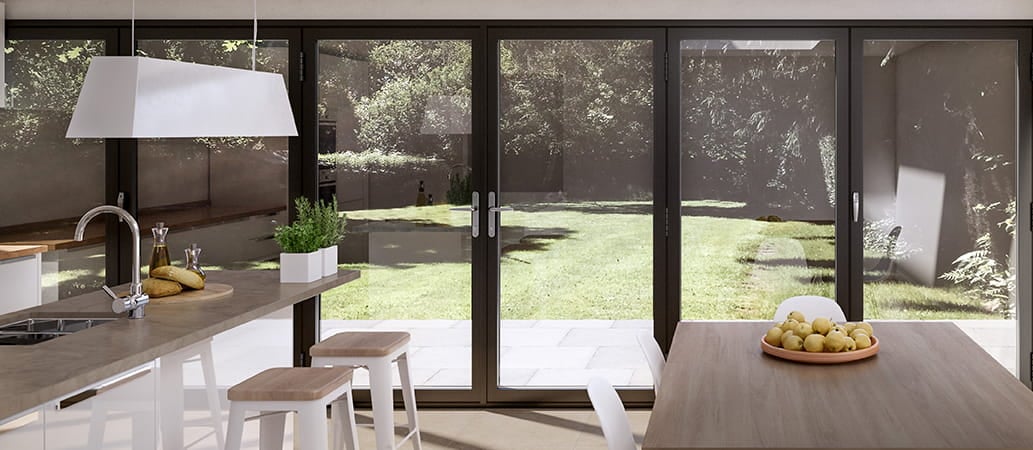
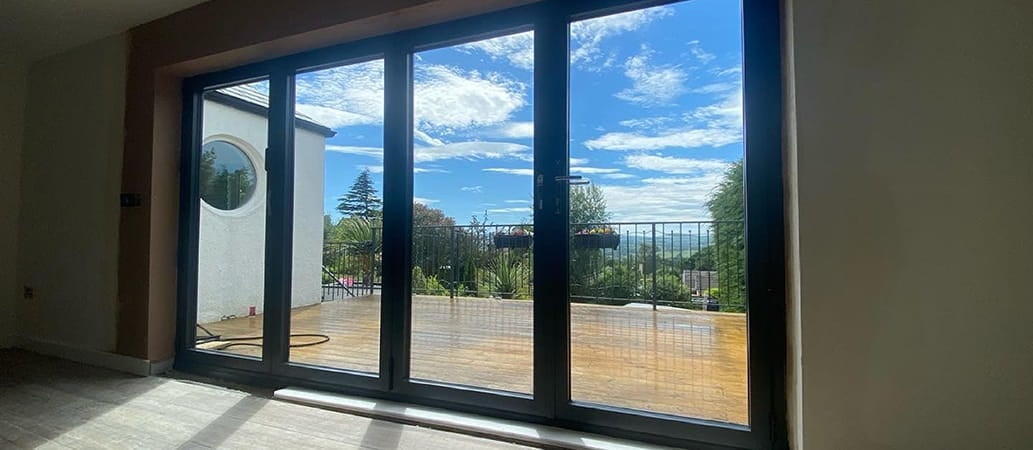
Black aluminium windows are extremely popular, and have moved from being a pretty niche architectural choice to one of the most recognisable features of contemporary UK homes over the past several years.
They work particularly well on properties with light-coloured exteriors, where the contrast between the dark frame and pale brick, render, or stone creates a strong, graphic effect that reads as intentional and considered.
They're especially common in new builds, extensions and renovations where the goal is a modern, high-end aesthetic. Crittall-style steel windows, which were fashionable in mid-century architecture and have experienced a significant revival, are almost always replicated in aluminium with a black finish, and the look has spread well beyond that reference point into mainstream residential design.
It's worth knowing that black aluminium window frames can show up dust and water marks more readily than lighter alternatives, particularly on the exterior. This isn't a reason to avoid them, but it's worth factoring into your maintenance expectations. The powder-coat finish on quality aluminium windows is durable and doesn't fade significantly, so the colour you choose on day one should still look close to the same several years down the line.
White Aluminium Windows
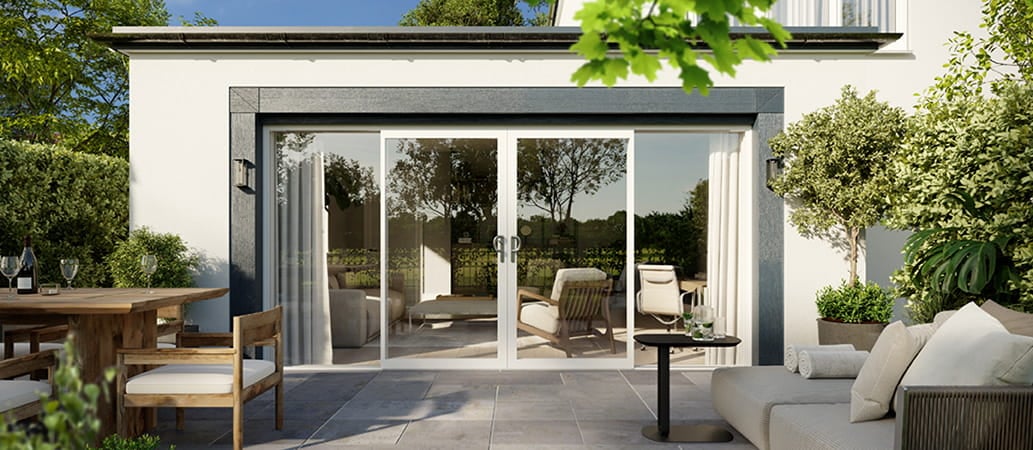
White aluminium windows are the closest aluminium comes to a universal default; in the sense that white is generally the most familiar and expected window colour across a broad range of UK property types.
On traditional or period homes, white frames help keep up visual continuity with the existing architecture. On suburban properties, they keep the facade clean and neutral. On newer builds, they can give a property a crisp, bright appearance that doesn't impose on the overall design.
The main thing white doesn't do is make a particularly bold statement, which for some homeowners is exactly what they want. If the goal is to update the windows without changing the fundamental character of the property, white is the safe and reliable choice. It also tends to work well in situations where the exterior already has a lot going on visually, since white frames sit quietly rather than competing with the surroundings (whether that’s landscaping, coloured doors, or fancy brickwork).
On the practical side of things, white frames tend to show dirt more easily on the interior, particularly in high-traffic areas like kitchens and bathrooms, though they also tend to show less water spotting on the exterior than dark frames do in equivalent conditions. The good news is that since you won’t need to worry too much about aluminium windows rusting, exterior maintenance is pretty minimal.
Bronze Aluminium Windows
Bronze aluminium windows occupy a distinct position in the market: they're warmer in tone than grey or black, and they carry a certain heritage quality that makes them a natural fit for period properties, high-end homes, and buildings where the aim is something a little more unusual than the standard contemporary palette.
The appeal of bronze is partly its versatility across different architectural contexts. On a Georgian or Victorian property, bronze frames can sit alongside traditional brickwork in a way that black or grey sometimes can't, offering a contemporary upgrade without jarring against the existing character of the building. On a modern home with natural stone or warm timber elements, bronze can reinforce the palette rather than contrasting against it.
Bronze tends to be slightly less common than black or grey, which can itself be an advantage for any homeowners who want the property to stand out from its neighbours! It's also worth noting that the term ‘bronze’ actually covers a range of finishes from lighter golden tones to deeper, darker shades closer to dark brown, so it's worth seeing physical samples before committing to a specific option.
Dark Grey Aluminium Windows
You’ve probably seen dark grey aluminium windows out and about (and particularly the shade known as anthracite grey), since it’s become one of the most widely specified colours for aluminium windows and doors in the UK over the past decade. It sits in an interesting position between the boldness of black and the neutrality of mid-grey, offering a strong, contemporary look that is slightly softer and a bit more versatile than pure black.
One of the practical advantages of dark grey over black is that it tends to be a little more forgiving in terms of showing water marks and dust on the exterior, while still delivering a similar visual impact from a distance.
For homeowners who want the modern, dark-frame aesthetic but are concerned about maintenance and marking visibility, dark grey can be a sensible middle ground.
Dark grey also tends to work well across a wide range of property types and external materials. It suits brick, render, stone, and timber boarding, and it bridges traditional and contemporary aesthetics more easily than black, which can sometimes feel a bit too stark on older or more characterful buildings.
Light Grey Aluminium Windows
Light grey aluminium windows appeal to homeowners who want that contemporary feel without the visual weight that darker frames can bring. Where black or dark grey frames can dominate a facade (particularly a light or small one), light grey sits more quietly, creating a modern look that is subtle rather than statement-making.
This makes light grey a really good option for minimalist or Scandinavian-influenced designs, where the goal is clean simplicity rather than contrast or detail. Lighter grey aluminium also works well on homes where the exterior materials are already relatively dark (for example slate tiles or darker grey brick), since a lighter frame provides a bit of visual interest without switching to white.
On properties that sit within conservation areas, heritage areas, or have planning restrictions on exterior colours, light grey often represents a contemporary option that is more likely to gain approval than darker tones.
The slightly lower contrast of light grey frames does mean they blend into the surrounding architecture more, which can be either a benefit or a limitation depending on the look you’re trying to achieve.
Dark vs Light Aluminium Window Frames: Which Is Better?
The question of whether dark or light aluminium frames are the better choice comes up often, and the honest answer is that neither is objectively superior. The right answer depends on what you're trying to achieve and what the property already looks like (as well as your taste!).
Dark frames tend to create stronger visual contrast and a more defined appearance, which particularly suits contemporary architecture and properties with pale exteriors. They read as modern, clean, and intentional, and when done well, they can significantly sharpen the appearance of a facade. The trade-off is that they're a more committed aesthetic choice, and they may show water marks and dust on the exterior more readily, so you need to factor in potential cleaning and maintenance.
Light frames are potentially a bit more versatile, in the sense that they're less likely to conflict with an existing exterior scheme, and they tend to make a facade feel brighter and more open. They're the lower-risk choice for homeowners who aren't sure (which is exactly why they’re so common for new-build homes), and they're generally easier to sell when it comes to resale, simply because they're less polarising. The trade-off is that they make less of a visual impact and may age less distinctively than a well-chosen dark frame; so if style or contrast is particularly important to you, it’s something to consider.
For most homeowners, the most useful approach is to look at the exterior of the property and consider what the frames need to do. If the goal is contrast and a contemporary update, darker is usually the right direction. If the goal is to brighten the facade and keep things neutral, lighter is the sensible starting point. Ultimately though, the choice comes down to taste, so it’s worth looking at frames in person first.
What Colour Adds the Most Value to a Home?
It might sound silly to some people, but the relationship between window colour and property value is genuinely a real thing. However, it’s nuanced, and it's worth being realistic about what it does and doesn't mean in practice.
Window colour isn't the primary driver of value in the way that condition, size, and location are, but it does contribute to the first impression a property makes, and first impressions do influence buyer behaviour and the perceptions of a property.
Black and dark grey windows are often perceived by buyers and estate agents as markers of a contemporary, well-updated property, particularly in the mid-to-upper end of the market.
A home that has had its windows replaced with quality dark-framed aluminium systems (especially alongside other contemporary features like a new front door or updated cladding) tends to present as more desirable and better maintained than one with older white uPVC, for example.
That said, the value case for any window colour depends heavily on the property type and the local market. In areas where most buyers are looking for traditional properties, highly contemporary window choices can feel a bit out of place. In areas with a strong market for modern, renovated homes, they can genuinely shift buyer perception. On a new-build estate, for example, chances are most of the other homes nearby will have white windows, so you might want to follow suit.
The most reliable advice is to choose a colour that suits the property (and its surroundings) well and is likely to appeal to a broad range of buyers in the long term, rather than trying to meet trends that may have moved on by the time you come to sell.
As with any housing parts, quality and condition are ultimately more important for windows than colour.
The bottom line is: a set of well-specified, well-maintained aluminium windows in almost any finish will be more valuable to a buyer than poorly maintained windows in a currently fashionable colour.
What Is the Average Cost of Aluminium Windows in the UK?
Aluminium windows generally cost more than uPVC at the point of purchase, but you have to bear in mind that the low maintenance requirements and long lifespan mean that the total cost of ownership over time is often a lot more similar (or even better) than the upfront figures suggest.
Costs vary considerably depending on the size of the window, the configuration, the glazing specification and where you are in the country, but the following ranges give a reasonable general guide.
For a standard aluminium casement window, you can expect to pay in the region of £400* to £900* per window including installation, depending on size and specification. Larger windows, e.g. bay configurations or those with more complex opening arrangements will sit toward the higher end of that price bracket, or above it. For a typical three-bedroom home replacing all windows, total costs for aluminium are often in the range of £6,000* to £15,000* or more, again depending on the number of windows, their sizes and the specification chosen.
Sliding sash aluminium windows, which are a more complex product, tend to be priced at the higher end of the range or above it. Fixed (non-opening) lights are generally less expensive than opening casements of equivalent size, which is worth bearing in mind if some of your windows don't need to open.
Colour can have an effect on price (usually small). Standard colours like white, black, and anthracite grey are typically available at no premium or a very small one, since they're high-volume finishes that manufacturers hold in stock. More unusual colours, dual-colour finishes, or bespoke RAL matches may carry an additional cost, though the difference is usually minimal relative to the overall price of the installation.
The team at National Plastics can help with guidance on specification and pricing for your requirements.
Choosing the Best Aluminium Window Colour for Your Home
Once you've looked at the options, narrowing down the right colour for your property is generally a matter of working through a few practical considerations rather than trying to identify a single universally correct answer.
Start with the exterior materials of your home. Pale brick, white render, and light stone generally work well with both dark and light frames, giving you more flexibility. Red or warm-toned brick can work beautifully with bronze or dark grey, but can sometimes clash with very cool greys or stark black. Timber cladding and more textured exteriors often benefit from frames that complement the warmth of the materials rather than contrasting sharply against them.
Think also about what else on the exterior. If you’re looking at guttering, a front door, or external joinery in a particular colour, the windows should work with those rather than against them. Matching the window frames to the front door, or at least choosing colours from the same tonal family, tends to give a more considered and coherent result.
It's worth looking at properties similar to yours in the local area, both to understand what tends to work well and to identify where you might want to differentiate. Ordering samples or asking your supplier to show you the finishes in person before committing to frames is highly recommended, since screen representations of colours are rarely fully accurate, and a colour that looks right on a brochure can feel different when you see it against your actual brickwork.
Finally, try to think beyond current trends. Window colours are not something you'll be replacing every few years, and a choice that suits the property well and will age gracefully is almost always better than one that follows a fashion. Good design tends to outlast fashion, and the same is true of window colour.
Why Choose National Plastics for Aluminium Windows?
National Plastics supplies a range of aluminium windows available in a wide selection of colours and finishes, and our branch teams are well placed to help you work through the options for your specific project. Whether you already know which colour you want or you're still working it out, we can show you the finishes in person and help you think through how they'd work against your property's exterior.
You can browse our full windows and doors range online, or visit your nearest National Plastics branch to speak with the team and see the products for yourself. Getting advice from someone who works with these products every day is often the quickest way to feel confident about a decision that you'll be living with for a long time.
*Prices are a guide only and subject to change based on property, product choices, and installation requirements.
FAQs
What is the best colour for aluminium windows?
There isn't a single best colour, as the right choice depends on your property's style, exterior materials and personal preference. Black and dark grey are the most popular choices for contemporary homes, and create strong visual contrast. White remains the most common option for traditional properties and suburban homes. Bronze suits period and heritage properties. Light grey is a good option for a subtle, modern look without high contrast. The best approach is to consider your property's exterior and choose a colour that complements it for the long term.
Are black aluminium windows more expensive than other colours?
Not necessarily. Black is one of the most commonly specified aluminium window colours in the UK, which means it's a standard stock finish for most manufacturers and doesn't usually carry a premium over other popular options like white or anthracite grey. Unusual or bespoke colours may carry a small additional cost, but standard dark finishes like black and anthracite grey are generally priced in line with the rest of the range.
Do aluminium window frames fade over time?
Quality aluminium windows use a powder-coat finish that is designed to be UV-resistant and durable over many years of exposure.
While no exterior finish is entirely immune to very gradual colour change over an extended period exposed to the elements, well-made aluminium windows will maintain their appearance better than painted timber, and significantly better than cheaper alternatives. Choosing a reputable manufacturer and supplier is the most important factor in long-term colour retention.
What colour aluminium windows add the most kerb appeal?
Dark frames, particularly black and anthracite grey, are widely associated with contemporary, well-updated properties and tend to create the strongest visual impact on the exterior of a home. That said, kerb appeal depends on the overall composition of the facade rather than window colour alone, and a set of well-chosen white or bronze frames on the right property can be just as effective. The most important thing is that the window colour works with the rest of the exterior.
How do I choose the right aluminium window colour?
Start by looking at your property's exterior materials and existing colour palette. Consider what you want the windows to do visually: create contrast, blend in, or complement a specific material on the house.
Look at similar properties in your area for reference, and order physical colour samples before committing, since on-screen representations of colours are usually not really accurate enough to make a confident decision. If in doubt, the team at National Plastics can help you work through the options.