Are Composite Doors Secure and Fire Rated?
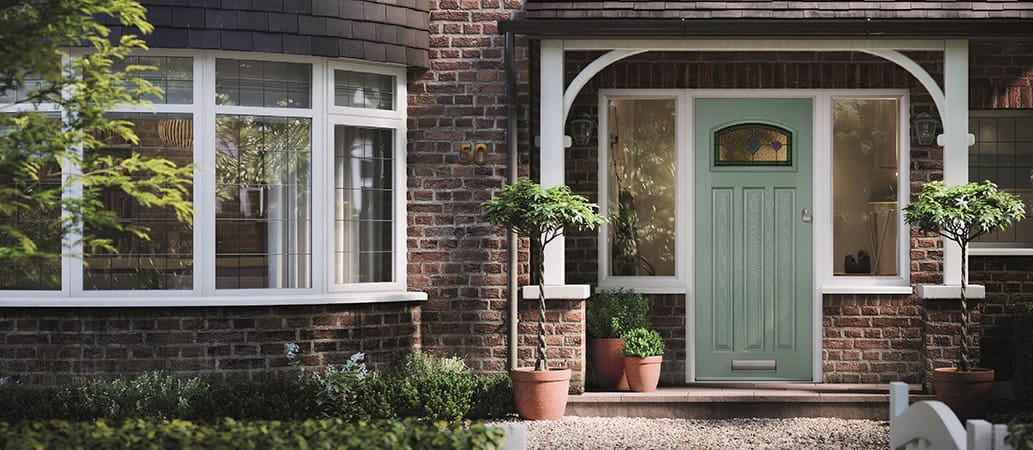
The doors in your home need to do lots of things: keep your home secure, close tightly for privacy and fire security, stay structurally sound and, ideally, add a bit of curb appeal. While old-fashioned wooden doors are certainly attractive, they don't always stand up to today's demands for security and safety.
Enter composite doors: a modern solution that combines style with safe and secure substance. This blog is a guide to everything you need to know about composite doors, from fire safety and certification through to basic privacy and security.
Are Composite Doors Secure?
Security is, arguably, the most important thing a door's there for. The good news is that composite doors are among the most secure and reliable types of doors commonly available for residential properties.
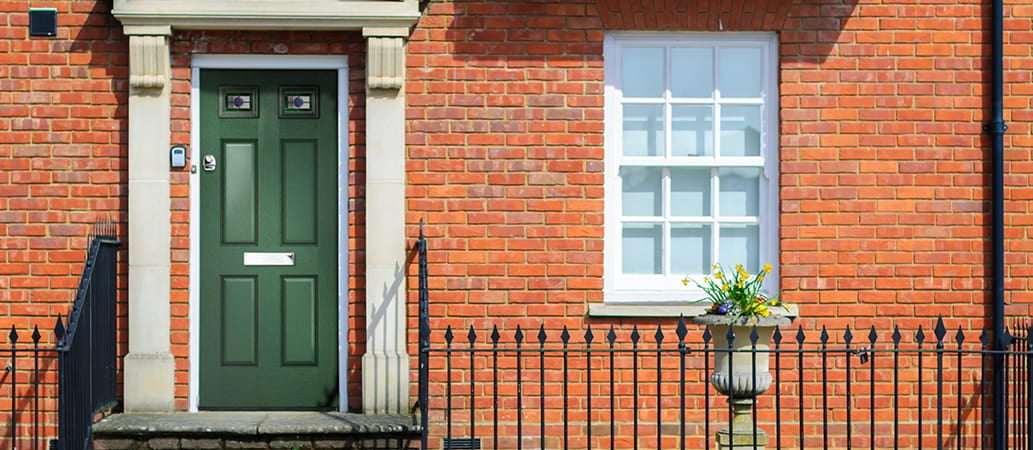
Unlike a single-material door (like timber or uPVC), a composite door uses a "sandwich" of materials together. This is usually made up of a solid timber or high-density foam core, glass-reinforced plastic (GRP) skin, and a reinforced frame. National Plastics composite doors are designed with woodgrain effect GRP skins that won't peel or flake, but offer the look and sheen of real wood.
This multi-layer construction makes the door incredibly dense, sturdy, and resistant to any "brute force" attacks that burglars might use to try and break in: kicking, shoulder-shunting, or sledging, etc. Having multiple layers of material means there's a lot more overall strength that can withstand force and most attempts to break through it.
Key Security Features of Composite Doors
Most modern composite doors don't just rely on the old-fashioned lock at the handle. You know the type: one single key or simple latch, that really only takes one strong shove to give way. Modern composites use multi-point locking systems made up of a series of hooks, rollers and deadbolts. These lock systems engage with the door frame at multiple points, making it pretty close to impossible to crowbar the door open.
The composite door lock itself is often a 3-star anti-snap cylinder too, specifically purpose-built to withstand drilling, picking and snapping. The importance of these built-in protections against burglars can't be overstated: over 75% of domestic burglaries happen when the external door is forced open, so choosing a reliable model is a vital deterrent.
On the outside, composite doors are designed to be both weather and impact resistant. They're made (and tested rigorously) so they don't crack or split under pressure; the idea being that if a burglar tries to smash through the door or break the frame apart, they can't. This glass-reinforced plastic skin is one of the big advances in door production in recent years: where timber would splinter and give way under force or decay, the composite structure is designed to stay strong.
On the inside, reinforced cores are strengthened to stand up to threats too. High-density and high-insulation foam cores are carefully formulated to provide excellent rigidity and insulation levels, so they keep heat in.
How Composite Doors Compare to Other Door Types
So, how do modern composite doors stack up to other types, and how do you know which type to choose for your property? Here's a comparison:
| Door Type | Impact Resistance | Main Security Strength | Potential Downsides | Security Verdict |
|---|---|---|---|---|
| Composite | Extreme: the high-density core and GRP skin is incredibly hard to pierce. | The multi-material "sandwich" design absorbs most heavy force. | Higher initial cost, but excellent investment for security, safety and efficiency. | Best-in-Class |
| uPVC | Moderate: lightweight structure relies on internal steel reinforcements. | Budget-friendly security with decent multi-point locks. | Can be prone to "door spreading" (forcing the frame apart). | Standard Security |
| Timber | High (if solid): thick wood is naturally heavy and tough. | Natural mass is hard to break through when the door is new. | Can warp or rot, causing locks to misalign and create gaps. Can also splinter under force. | High (though also high maintenance) |
| Aluminium | Very High: metal is inherently strong and rigid. | Excellent frame strength; almost impossible to "spread" the frame. | Thinner panels can sometimes be dented; higher price point. | Premium Choice |
Are Composite Doors Fire Rated?
It's important to note when you're looking for new doors that not all composite doors are designated fire doors. A standard composite door is mainly designed for thermal efficiency and security, not fire resistance.
Fire-rated composite doors are a specialist category, widely available. They're specially engineered with fire-retardant materials and specific intumescent seals that expand when exposed to heat to block smoke and flames from getting through.
What Fire Ratings Mean for Composite Doors
When it comes to fire ratings and safety specifications, there are of course several classifications that materials have to meet, both in terms of integrity and insulation.
The FD30 Rating is basically the industry standard for fire insulation. It stands for "Fire Door 30," which means that the door in question has been tested to withstand the heat and pressure of a typical fire for a minimum of 30 minutes.
FD30 provides an assurance that during that critical half-hour window, the door won't collapse (this is the integrity part) under heat and will also prevent the passage of smoke and fire (insulation).
When Fire-Rated Composite Doors Are Required
Having a door that provides reliable fire resistance is important for any home, but it's a legal requirement for certain buildings.
For example, apartment blocks and flats are typically required to have a fire-rated composite as the main entrance door leading from a shared hallway into a private residence. This is similar to HMOs (Homes in Multiple Occupation, or shared housing), where bedroom doors and the doors to communal areas need to be fire-rated.
In lots of homes, building regulations mandate a fire-rated composite should be used to connect an integral or in-built garage to the main house.
How Secure and Fire-Rated Composite Doors Are Tested
Seeing that a composite door is fire-rated is all well and good, but what do those ratings actually mean? It's useful to understand exactly how security and fire ratings are reached in order to see what you need for your property.
PAS 24 is the UK standard for "Enhanced Security Performance" set by the BSI. It involves attack testing, which is just what it sounds like: professionals try to bypass the door using various tools and methods that criminals might use to get in. It's a real-world test of how doors and other entryways stand up to threats and attempts to break-in.
Then there's BS EN 1634, the standard for fire resistance and smoke control. In this fire test, doors are placed in a furnace to prove they can hold back extreme temperatures for a certain amount of time. As we mentioned above, it's hugely important to know that your door will withstand heat for long enough for anyone inside a burning building to escape or get help.
In the UK, safety testing for doors isn't a one-and-done process. Repeated testing and regular audits of methods are required to make sure that flukes can't happen and that the products we're using in our homes can be trusted. That's where UKAS-accredited testing comes in (essentially third-party certification), which checks that any manufacturer's processes are regularly and stringently audited.
What to Look for When Choosing a Secure Composite Door
Knowing that a door is "secure" in theory is one thing, but knowing what to check when you're standing in a showroom is quite another. You can do your part by remembering to lock it (hopefully), but you need to know that the door itself has been made to the high standards it needs to be to help keep your home safe and sound.
To ensure you're getting a door that offers genuine protection rather than just a sturdy look, there are a few non-negotiable features you should look for on the spec sheet.
Certification and Accreditation
First and foremost, look for the PAS 24:2016 stamp. This isn't just a random string of numbers: it's a rigorous industry standard that proves the door and its frame have been tested as a complete unit against common attack and burglary methods.
You should also keep an eye out for "Secured by Design" accreditation. This is a police-backed initiative that focuses on crime prevention through high-quality engineering. So, if a door has the SBD logo, it's effectively passed a "police-approved" security test.
Hardware Quality
You can invest in security cameras and high-tech systems, but if your door itself isn't up to scratch, it's all a bit pointless. The actual lock itself is sort of like the brain of your door's security.
You want to make sure the lock cylinder is TS007 3-star rated (currently the highest level of protection available for cylinder locks). This type of cylinder is designed specifically to defeat "lock snapping"; a common technique where burglars apply force to break a standard lock in seconds. A 3-star cylinder is essentially the gold standard for keeping the mechanism intact under pressure, and one of the first lines of defence against burglaries.
Glass Specs
If you've fallen in love with a door design that features glass panels, don't worry: you don't have to trade security for style. Just double check that the windows are made from toughened or laminated safety glass.
Laminated glass is particularly impressive and useful for safety; it's made by sandwiching a layer of plastic between two panes of glass. Even if the glass is hit with a heavy object, it stays held together by the plastic interlayer rather than shattering, preventing an easy entry point.
Professional Installation
It's a point that often gets overlooked, but even the world's most secure fire door is only as good as its installation.
To work correctly, a high-security door must be installed perfectly square within a reinforced frame. If the door is even slightly crooked, the multi-point locks might not engage fully, or the fire-resistant seals might not sit flush. Professional installation ensures that the structural integrity of the door is backed up by a solid, secure fit into your home's brickwork.
At a Glance: Composite Door Security Checklist
When you're comparing different models, it can be easy to get distracted by colours and letterbox styles. To help you stay focused on what really matters, we've put together this quick-fire checklist.
Pro Tip: Look for these four specific features when viewing doors in-branch. If a door ticks all four boxes, that's probably a great choice for a safe, secure and reliable front food for your home.
- [] PAS 24:2016 Certified: The industry "gold standard." This confirms the door has been physically attacked by professionals in a lab environment and held its ground.
- [] 3-Star Sold Secure Diamond Cylinder: Think of this as the ultimate deterrent. A 3-star rating shows that the lock is anti-snap, anti-drill, and anti-pick.
- [] Laminated Glass (if applicable): If your door has a window, ideally try to make sure it's laminated. Unlike standard toughened glass which can shatter into pieces, laminated glass stays in one piece even under heavy impact.
- [] Internal Beading: Check that the glass is glazed from the inside. This simple design feature prevents an intruder from simply "popping" the glass out from the street to get inside.
Are Composite Doors a Safe Choice for UK Homes?
When you pull all these factors together (the multi-layered core, the GRP skin, and the high-tech locking systems) it's easy to see why composite doors have become the preferred choice for safety-conscious homeowners. They offer a rare combination: the beautiful, traditional look of timber with the high-performance, low-maintenance security of modern engineering. Style, substance, safety and security in one.
To know your family is protected at night or that your property is up to building regulations, a well-specified composite door is a future-proof investment in your home's safety.
Get Advice on Composite Doors from National Plastics
Choosing the right door involves balancing your personal style with the technical requirements of security and fire safety.
At National Plastics, we're proud to be a trusted resource for homeowners and tradespeople alike. Our teams can help you navigate the jargon, from FD30 ratings to PAS 24 certifications, guaranteeing you walk away with a door that fits your home perfectly.
Visit your local branch or send an enquiry.
Nothing beats seeing the quality of a composite door in person. Visit your nearest National Plastics branch to feel the weight of our doors, test the smooth action of the 3-star locks, and see our range of woodgrain finishes.
If you're ready to start your project now, you can also contact our team online, and our experts will be happy to provide tailored recommendations for your specific needs.
FAQS
Are composite doors more secure than uPVC doors?
Yes, composite doors are generally considered more secure than standard uPVC doors. While uPVC doors are reliable, they are much lighter and rely on an internal steel frame for strength. Composite doors are significantly denser and thicker, using a multi-layered "sandwich" of materials like solid timber or high-density foam.
Are all composite doors fire-rated by default?
No, not all composite doors are fire-rated as standard. Most standard composite doors are designed primarily for security and thermal insulation. If you require a fire door (for example, to connect a garage to your home or for a flat entrance) you need to specifically choose a "Fire-Rated Composite Door." These are specialised FD30-rated units engineered to withstand flames and smoke for at least 30 minutes.
Can a composite door with glass panels still be secure?
Absolutely, having glass in your door doesn't have to mean compromising on safety. Most high-quality composite doors use toughened or laminated safety glass as standard. Laminated glass is particularly secure because it features a plastic interlayer that holds the glass together even if it's struck, preventing an intruder from simply breaking a pane to reach the handle inside.
How do I know if my composite door is properly certified?
The easiest way to check is to look for the PAS 24:2016 accreditation on the product specification itself. You should also check for a "Secured by Design" logo, which indicates the door meets police-preferred specifications. For fire doors, look for the FD30 label and ensure it has been tested by a UKAS-accredited third party.