Is UPVC Sustainable? Debunking the Myths
If you're doing your research before replacing windows, doors, fascias, or roofing, there's a good chance you've already stumbled across the debate around whether UPVC is sustainable. It's one of those topics where opinions are strong, the internet is contradictory, and the truth tends to sit somewhere in the middle.
The short version? UPVC has a far better environmental story than most people give it credit for, and in this blog, we're going to explain exactly why.
What is UPVC, Anyway?
Before we get into the sustainability of it all, what is UPVC, and how is it made? It's worth making sure we're all on the same page about what UPVC actually is… because the name alone isn't exactly self-explanatory.
UPVC stands for Unplasticised Polyvinyl Chloride. It's a type of rigid plastic, which is a bit confusing, but the “unplasticised” part just means that no softening agents have been added. That makes it harder, more durable, and more dimensionally stable than regular PVC. If you've ever seen standard PVC (used for things like flexible hoses or shower curtains), UPVC is its much sturdier, longer-lasting cousin.
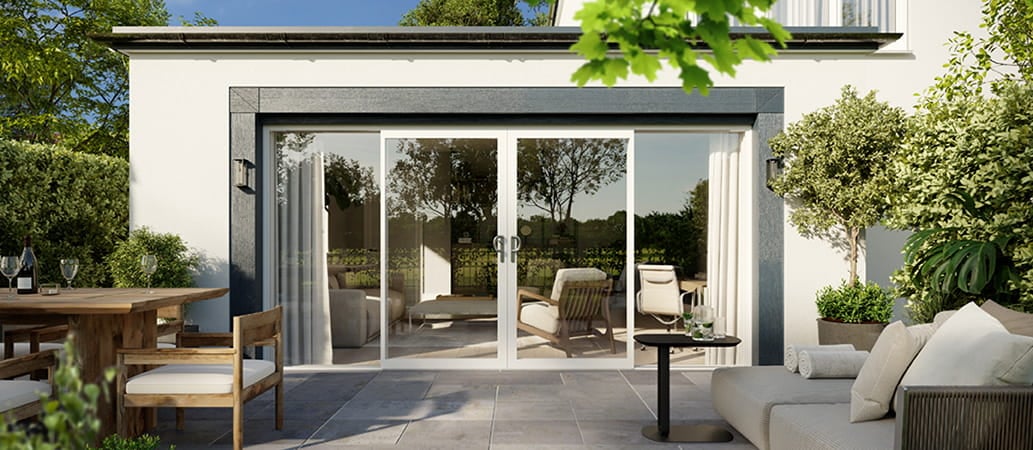
In home improvements and building, UPVC is pretty much everywhere. It's the material behind a huge proportion of the windows and doors fitted in UK homes, as well as fascias, soffits, guttering, cladding, and drainage systems.
UPVC for construction became the go-to choice from the 1980s onwards, largely replacing timber for these applications because of how well it handles our British weather and how little maintenance it requires. It doesn't rot, warp, crack, or need repainting, and it holds up well against rain, UV, and temperature changes over many years.
In short, PVC is a practical, widely-used building material with a long track record in UK homes. And it's that track record, alongside some recent industry developments, that makes the sustainability conversation more nuanced than you might expect.
Why People Question Whether UPVC Is Sustainable
Let's be upfront: manufacturing UPVC (or any building material, for that matter) isn't a completely carbon-neutral process. Nobody serious is claiming otherwise. That's partly where the scepticism around UPVC sustainability comes from, and it's a fair point to raise.
But here's the thing: sustainability isn't just about what happens in the factory. A truly honest environmental assessment has to account for the full lifetime of a product. That means looking at how long it lasts, how much energy and resource it consumes while it's in use, and what happens at the end of its life.
When you look at UPVC through that full lens that takes everything into account, the story changes quite a bit.
Myth 1: UPVC Doesn't Last Long Enough to Be Worth It
Actually, the opposite is true.
UPVC products have a projected lifespan of 60 years or more, based on accelerated weather testing. And that's not just theoretical either; our own installations from over 30 years ago have been surveyed and show no meaningful change in performance or condition. Real-world evidence backs up the long-term projections, showing that when it’s done right, UPVC can stand the test of time.
Why does this matter from a sustainability point of view? Because a product that lasts 60 years only needs to be made once.
Shorter-lived materials (and badly installed ones) get replaced more often, and every replacement means more manufacturing, more transport, and more waste. When you spread the environmental cost of making UPVC across six decades of reliable service, the maths looks a lot more reasonable.
Myth 2: Maintenance Products Add to the Environmental Impact
Not with UPVC, they don't… because there essentially aren't any. UPVC is low-maintenance, with no extra products (from cleaners to lubricants) usually required.
One of the things that makes timber and some other materials less environmentally straightforward than they might seem is the ongoing maintenance they require: paints, varnishes, treatments, and eventual repairs or partial replacements. All of those have their own footprint.
UPVC needs none of that. There are no paints, no sealants, no specialist products involved with UPVC maintenance. A wipe down with warm soapy water is genuinely all it takes to keep UPVC looking great year after year. That means no ongoing resource use during its lifetime and no contributions to greenhouse gas emissions in what's called the in-use phase (the period between installation and disposal), when other products might need chemical cleaners and degreasers.
For homeowners, the practical benefit is obvious (no weekends up a ladder with a paintbrush in one hand and a precariously open varnish can in the other). But the environmental case is just as compelling, since UPVC’s low-maintenance profile also comes with green benefits.
Myth 3: UPVC Just Ends Up in Landfill
This is probably the most common UPVC myth, and it's worth addressing head-on.
Cellular PVC can be recycled up to seven times without any significant loss in performance. In technical terms, that's because the recycling process doesn't significantly shorten the molecular chain length of PVC, which means it keeps its properties through multiple recycling cycles.
So old roofline materials, cladding, and rainwater products don't have to become waste after a couple of years: they can re-enter the production process and become new products. The circle of (UPVC) life!
This is the ‘circular economy’ in action. And rather than being an aspiration or just some eco-friendly buzzword you hear on the evening news, it's something leading manufacturers are already doing.
For example, Swish Building Products, one of the UK's leading UPVC manufacturers, has significantly increased the use of post-consumer waste PVC in new rainwater products, reducing demand for virgin material at source and lessening demand on the planet. Recycling PVC also produces substantially less CO₂ than manufacturing from scratch, so every tonne recycled is a genuine win.
Myth 4: UPVC Production Costs a Lot of Energy
Stick with us, because this one is worth looking at with some actual numbers, because the comparison to other common building materials is striking.
Manufacturing any product requires energy, and UPVC is no different. But when you put it alongside the alternatives, UPVC comes out of the comparison looking surprisingly efficient.
According to European PVC data, producing suspension PVC requires around 60 MJ of combined process and feedstock energy per kilogram, which is equivalent to roughly 2 kg of oil equivalent energy per cubic decimetre of uPVC. For the same volume of steel, that figure rises to 5kg. For aluminium, it's as much as 15kg, over seven times more energy-intensive than UPVC.
Putting that into basic terms, it means that even compared to other plastics and materials, UPVC holds its own, typically requiring around half as much oil in production as other polymers on average.
It's also worth knowing that the oil contained within UPVC products doesn't just disappear at the end of their life. Even after several decades of use, the oil can be recovered and used to generate energy in incineration facilities, meaning the material has the potential to contribute useful energy even when its working life as a building product is over.
What Responsible UPVC Manufacturers Are Doing
Sustainability in UPVC is about the product’s usage, but it's also about how it's made. The better manufacturers in the industry have invested heavily in reducing the environmental footprint of production.
Swish Building Products, for example, has cut its energy intensity by over 78% since 2008 and reduced water consumption by more than 67% over the same period. As a reputable manufacturer, Swish holds ISO 14001 (Environmental Management) and ISO 50001 (Energy Management) certifications, and was also awarded Gold status by the Supply Chain Sustainability School (the highest tier of recognition available).
Swish was also the first UK cellular PVC manufacturer to receive an independently verified Environmental Product Declaration (EPD), which is an impartial third-party assessment of a product's environmental impact over its entire lifecycle. That kind of transparency is exactly what responsible sourcing of UPVC looks like.
So… Is UPVC a Sustainable Choice?
With the full picture on the table, the answer is: yes, it genuinely can be, and maybe more so than you might expect.
The environmental case for UPVC rests on four strong legs: an achievable decades-long lifespan with infrequent need for replacement, zero maintenance requirements during that lifetime, the ability to be recycled multiple times at the end of its use, and an improving production process.
When you look at those factors, UPVC stacks up well against many alternative materials when it’s assessed honestly over a full lifecycle.
If you're choosing UPVC for your home or building project, the key is picking quality products from manufacturers who take their environmental responsibilities seriously. The longevity and recyclability of what you install matters just as much (if not more, in the long run) as the factory it came from.
Get Advice from the National Plastics Team
Still weighing up your options? Our team can help you choose the right materials for your project, whether that's UPVC, aluminium, or something else entirely. We'll talk you through the performance, cost and environmental credentials of each so you can make a decision you feel good about.
Visit your local branch or get in touch with our team for a tailored recommendation.
FAQs
Is UPVC actually recyclable?
Yes, PVC can be recycled up to seven times without losing its structural properties. At the end of its life, products like UPVC roofline, windows and cladding can be recovered and remade and reprocessed into new products, keeping the material in use and out of landfill.
Lots of leading manufacturers are already incorporating recycled PVC into production processes.
How long does UPVC last?
UPVC has a projected lifespan of up to 60+ years, based on accelerated weather testing. Installations from over 30 years ago have been surveyed with no significant change in performance, so the long-term projections are well supported by real-world evidence.
That longevity is one of the strongest environmental arguments for choosing UPVC.
Does UPVC require lots of maintenance?
UPVC has a projected lifespan of up to 60+ years, based on accelerated weather testing. Installations from over 30 years ago have been surveyed with no significant change in performance, so the long-term projections are well supported by real-world evidence. That longevity is one of the strongest environmental arguments for choosing UPVC.
Is UPVC better for the environment than timber?
Honestly, that depends on what you're measuring. Timber is a natural material with good sustainability credentials when responsibly sourced, but it requires regular maintenance (paints, treatments, repairs) and tends to have a shorter effective lifespan if not properly cared for. UPVC's lower maintenance needs and longer service life often make it the more practical and resource-efficient choice over time, especially when it’s sourced from a manufacturer with strong environmental credentials.
Does UPVC production harm the environment?
Manufacturing any building material has an environmental footprint, and UPVC is no exception. However, the best manufacturers in the industry have made significant strides in reducing their impact.
Leading producers like Swish Building Products have cut energy use and water consumption by over 60–70% since 2008, hold environmental management certifications, and are continually investing in more sustainable production methods.When you’re assessing across the full lifecycle (from production through service life, and on to end-of-life recycling) UPVC generally compares well with most alternatives.