How Bi-Fold Doors Maximise Small Spaces
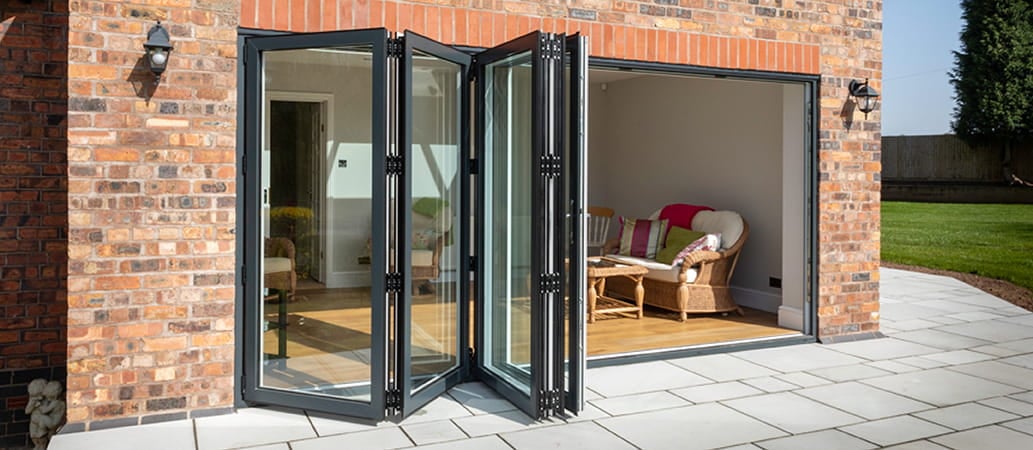
Famously, good things come in small packages, and that's certainly true of perfectly sized compact homes. However, when you're dealing with small areas, every square inch of floor space is a precious commodity.
Guides to maximising space often focus on furniture or storage solutions, but smart design choices at the architecture level (right down to the choice of doors) can have a massive impact on how your room feels and functions.
Choosing the right door is about balancing the aesthetics of your home with structural practicality, and exterior bi-fold door are an excellent solution for smaller rooms and extensions.
Chances are, if you’re in a smaller property, some of your rooms are working double duty. They’re probably serving multiple purposes (dining room/office, living room/family room, conservatory/lounge, etc), so smart design choices will immediately level up your home’s liveability.
Why Door Choice Matters in Small Spaces
Let’s start with the basics. It’s easy to think of the door as a static object that’s just another part of the wall, but it has a huge impact on how much liveable space a room has.
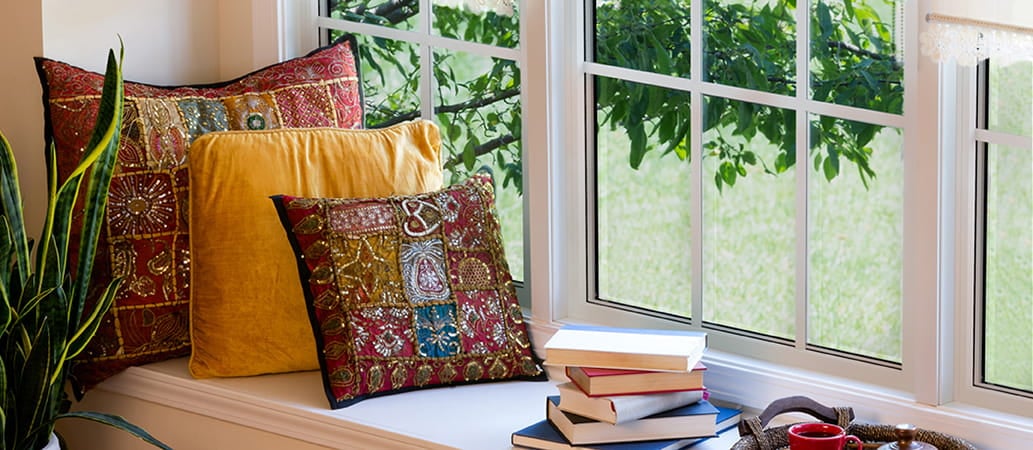
The “swing zone” of the door can make all the difference in a tight layout, and traditional hinged doors can be intrusive (whether they open into a room or out into the hallway). It’s similar to how much a bay or bow window can change how much seating or storage space you have in a room; if a door swings widely into your living room, that might be the difference between being able to fit that extra comfy armchair in there.
A standard door needs a wide arc of empty floor space just to open properly. That means it usually has an impact on where your furniture can be placed, forcing you to leave walls empty or move your sofa away from the best TV viewing spot. A door that opens out onto a narrow hallway or into a small kitchen can easily create a bottleneck that ruins the flow of the house.
Choosing a door that works with your square footage (rather than against it) is the first, foundational step in opening up a compact property.
The Benefits of Bi-Fold Doors in Small Rooms
Choosing small bi-fold doors comes with several functional and design advantages that help you overcome the limitations of compact living.
Space-Saving Folding Design
The main appeal of bi-fold doors is their signature folding panel system. Instead of a single large leaf/main door swinging into the room, bi-folds consist of multiple panels that stack neatly to one side when open.
It’s that clever concertina effect that frees up a ton of floor space that would otherwise be wasted on a standard door’s opening arc.
From a trade or DIY perspective, this is a huge plus for kitchen and dining rooms where space is at a bit of a premium. By installing bi-folds, you can put a kitchen island or dining table much closer to the walls or doorway than you could with a traditional casement door.
Enhancing Natural Light with Larger Glass Panels
It’s a pretty simple concept: dark corners make rooms feel smaller, and when you’re already dealing with cramped space, that’s the last thing you want. Bi-fold doors are designed with slim frames and large glass panels as standard, allowing maximum daylight to flood into compact rooms.
By reducing a section of opaque wall and replacing it with double or triple-glazed glass, you eliminate any dingy dark spots and create a more open atmosphere. It looks great, and it’s better for you too: according to the World Green Building Council, we feel better and are more productive with access to natural light.
Connecting to the Outdoors to Extend Living Space
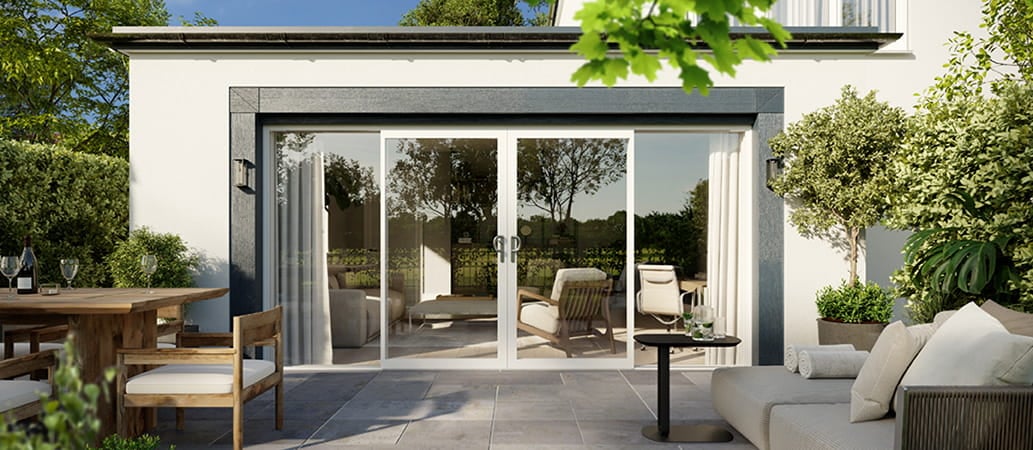
One of the most high-impact ways to increase your square footage (without actually increasing it, of course) is to blur the line between indoors and outdoors. One of the big benefits of bi-fold doors for small spaces is the option to open directly onto a patio or garden, visually extending the room outside the brick walls.
During the warmer months (they’re coming, we promise!), when bi-fold doors are fully retracted, your garden becomes an extra room. This creates the illusion of a much larger space, giving you even more options for entertaining.
Even when the rain inevitably turns up, the wide glass expanse of bi-folds means you’ve still got a visual connection to the outdoors and the feeling of space.
Creating Clear Sightlines
Away from actually decluttering furniture and decor, reducing visual barriers in a room is one of the biggest ways to make it feel bigger. Bi-fold doors offer uninterrupted views through the walls, drawing the eye outwards and creating a sense of real depth.
To maximise this effect and make rooms look instantly larger, choose slim aluminium door frames for your bi-folds, which offer the highest glass-to-frame ratio. Another top tip is to try to use consistent flooring (for example, the same or similar tiles in your kitchen and on your patio) to create the illusion of a single continuous space.
Are Bi-Fold Doors Right for Every Small Space?
Bi-fold doors for small spaces are often a win, but you do need to take every property and situation into consideration before pulling the trigger. Structural considerations are the most important thing; bi-fold doors are heavy and often need a structural lintel (support beam) to evenly distribute their weight.
You’ll also need to consider the ‘stack’ (the folded door panels) themselves. When the doors are fully open, folded panels take up more space at one side of the opening. If you’ve got particularly limited wall width, you might find that the stack restricts your walkway too much.
In these (very specific) cases, a sliding door might be a better option, as the panels slide behind one another rather than protruding out.
Choosing the Right Bi-Fold Doors for Small Spaces
When you're choosing doors for a compact home, the details are just as important as considering the size. Here's a quick breakdown of things to consider:
| Feature | What to Consider For Small Spaces |
|---|---|
| Door Material | When it comes to what doors should be made of, aluminium is the gold standard for small spaces, thanks to its strength that allows slim frames and large glass panels. uPVC can be a cost-effective alternative if budget is a consideration. |
| Colour | Darker frames (such as black or grey) can frame the view outside like a picture, making the door a feature in itself. Lighter frames can help doors blend into the walls to make rooms feel wider. |
| Threshold | A "low threshold" or "flush track" is recommended with small bi-fold doors. This gets rid of the trip hazard of a jutting step and makes the transition between indoor floor and outdoor decking or patio feel seamless. |
| Glazing | Always go for Low-E glass to keep your energy bills down. In smaller rooms, heat can build up and escape particularly quickly, so make sure thermal efficiency and reliable glazing are top of your priority list. |
At National Plastics, all our bi-fold doors meet high-spec security and thermal standards, so you've got peace of mind as well as style built in.
Of course, alongside materials and thresholds, the big question on every homeowner's mind is investment, and how much it will cost to add bi-folds to your build.
While it’s tricky to give a single flat rate because every compact extension and bespoke layout is different, understanding how features like frame materials and pane numbers impact your budget is essential. If you’re trying to figure out how to balance your project costs, it’s well worth checking out our guide on how much bi-fold doors cost to help you plan your budget effectively before you buy.
Get Advice on Bi-Fold Doors from National Plastics
Selecting the right architectural features for a property is about more than just the look; you need to think of the bigger picture in terms of both long-term performance and structural integrity.
Luckily, the team at National Plastics has worked with thousands of homeowners and tradespeople to find the perfect fit for every property type.
Every home is different, and what works for a large extension might not be the best fit for a compact terrace. We can help you navigate the technical details, from planning permission requirements to choosing the best configuration for your specific wall width.
Visit Your Local Branch or Send an Enquiry
Don't guess when it comes to your home improvement project. Visit one of our local branches to see our bi-fold door materials in person and feel the quality of the folding mechanisms. Alternatively, contact us online for a tailored quote and expert advice to help you maximise your space.
FAQS
What are bi-fold doors?
Bi-fold doors consist of multiple glass panels that fold back against themselves in a concertina shape. Unlike traditional doors, they slide along a track and stack neatly to one side, creating a wide, unobstructed opening between rooms or to the outdoors.
Are bi-fold doors good for small rooms?
Yes, they're an excellent choice for compact spaces because they don't need the "swing zone" of a traditional hinged door. By stacking to the side, they free up valuable floor space, making them ideal for small kitchens, dining areas, and extensions.
Do bi-fold doors make a room feel bigger?
Absolutely. By using large glass panes and slim frames, bi-fold doors flood a room with natural light and create clear sightlines to the garden. This visual connection to the outdoors seems to extend the room beyond its physical walls, making even the smallest space feel airier and more expansive.
What is the best material for small bi-fold doors?
Aluminium is often recommended for small spaces because the material is incredibly strong, allowing for the slimmest possible frames. This maximises the glass surface area, which is crucial for bringing light into a small room. uPVC is also a popular budget-friendly alternative.
How much space do bi-fold doors take up when folded?
The stack of panels will sit at a 90-degree angle to the track when the doors are fully open. The amount of space this takes up depends on the number of panels and the width of the frames. When you're planning for a small space, it's important to make sure your wall can accommodate this stack without blocking narrow walkways.
Are bi-fold doors energy efficient?
Modern bi-fold doors are designed with high thermal performance in mind. At National Plastics, our doors feature high-spec thermal technology and A-rated glass as standard to help keep your home warm and your energy bills down. Using Low-E glass is highly recommended to ensure the best possible insulation for your living space.